This site may contain links to affiliate websites, and I may earn a commission for any purchases made through those links at no additional cost to you.
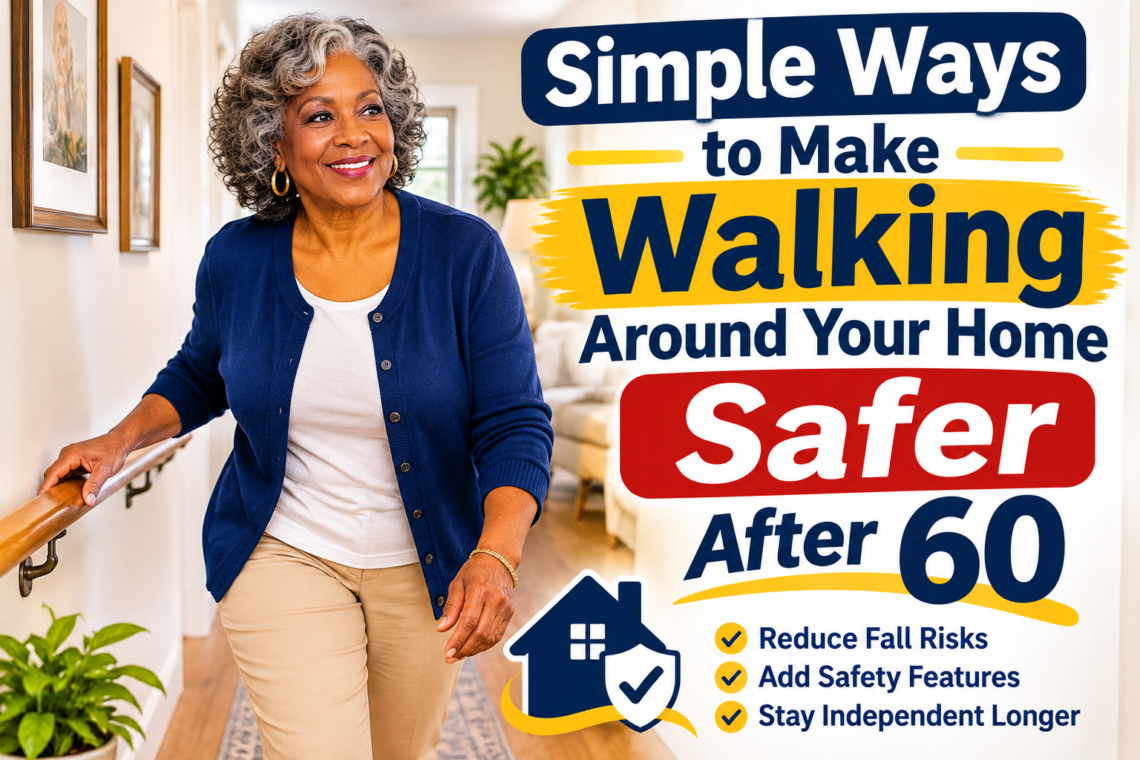
Simple Ways to Make Walking Around Your Home Safer After 60
As we get older, the little things around the house can sometimes create big problems. A loose rug, a dark hallway, or a misplaced electrical cord may not seem like much, but these everyday hazards can increase the risk of slips, trips, and falls.
The good news is that making your home safer doesn’t have to involve expensive renovations or major changes. A few simple adjustments can make it easier and more comfortable to walk from room to room.
Whether you live alone, with a spouse, or with family, creating a safer home environment can help you feel more confident and independent.
Here are 10 simple ways to make walking around your home safer.
1. Remove Loose Rugs and Floor Mats
Loose rugs are among the common household tripping hazards. Their corners can curl up, slide across the floor, or catch your feet as you walk.
Take a look at the rugs throughout your home, especially near doorways, hallways, and beside your bed.
Consider removing rugs that slide easily. If you prefer keeping a rug, use a nonslip backing designed to hold it securely in place. Make sure the edges lie flat against the floor.
Sometimes removing one small rug can make a big difference.
2. Keep Hallways and Walkways Clear
Hallways and frequently used walking areas should remain free of clutter.
Shoes, shopping bags, laundry baskets, boxes, and other household items can easily become obstacles. Even a small object on the floor can cause you to lose your balance.
Make it a habit to return items to their proper places instead of leaving them in walkways.
Keep a clear path between your bedroom, bathroom, kitchen, and living room. These are areas you probably walk through several times each day.
3. Improve the Lighting in Your Home
Poor lighting can make it difficult to see steps, furniture, changes in flooring, and objects on the ground.
Make sure your hallways, stairways, bedrooms, bathrooms, and entrances have enough light.
Consider adding:
- Nightlights along the hallway.
- Brighter bulbs where lighting is dim.
- Motion-sensor lights in frequently used areas.
- A bedside lamp that is easy to reach.
- Lighting near steps and entrances.
You should be able to turn on a light before walking into a dark room. Avoid walking through your home in the dark, especially at night.
4. Keep Electrical Cords Out of the Way
Phone chargers, lamp cords, extension cords, and television cables can create unexpected tripping hazards.
Look around your home to see whether any cords cross walking paths or extend across doorways.
Move furniture or rearrange equipment to keep cords against walls whenever possible. Use appropriate cord covers where needed.
Avoid running electrical cords underneath rugs. This can create both a tripping hazard and a potential fire risk.
5. Wear Comfortable Shoes With Nonslip Soles
Walking around the house in socks, loose slippers, or shoes without proper support can increase your risk of slipping.
Choose comfortable footwear that fits properly and has a nonslip sole. Shoes should stay securely on your feet and provide support when you walk.
Avoid slippers that are too loose, worn out, or open at the heel if they make you feel unsteady.
If you prefer wearing slippers indoors, look for a pair with a firm sole and a secure fit.
6. Be Careful Around the Bathroom
Bathrooms can become slippery when water gets on the floor. Getting in and out of the shower or stepping away from the sink can also be challenging.
Here are a few ways to make your bathroom safer:
- Wipe up water spills immediately.
- Use a nonslip bath mat with a secure backing.
- Install properly anchored grab bars near the shower or bathtub and toilet when needed.
- Keep towels and toiletries within easy reach.
- Make sure the bathroom has adequate lighting.
Remember that ordinary towel bars are not designed to support your body weight. If you need something to hold onto, have a qualified professional install grab bars securely.
7. Arrange Furniture to Create More Walking Space
Furniture that is too close together can make it difficult to move around comfortably.
Take a look at your living room and bedroom. Can you walk between the sofa, chairs, tables, and other furniture without turning sideways or squeezing through narrow spaces?
Rearrange furniture to create wider, clear walking paths.
Keep frequently used furniture in convenient locations, and avoid placing small tables or decorative items where they might interfere with walking.
If you use a cane or walker, make sure there is enough room to move through your home safely.
8. Keep Everyday Items Within Easy Reach
Reaching too high, bending too low, or stretching across furniture can affect your balance.
Store frequently used items where you can reach them comfortably.
For example:
- Keep everyday dishes on easy-to-reach shelves.
- Place commonly used kitchen supplies within comfortable reach.
- Store shoes where you can sit down to put them on.
- Keep remote controls and reading glasses near your favorite chair.
- Avoid climbing on chairs or step stools to retrieve household items.
A little organization can reduce unnecessary bending, stretching, and climbing.
9. Pay Attention to Steps and Changes in Flooring
Small steps, raised doorways, uneven flooring, and changes in carpet height can be easy to overlook.
Make sure steps are clearly visible and have sturdy handrails where appropriate. Repair loose carpeting, damaged flooring, and uneven surfaces.
If your home has stairs, use the handrail and avoid carrying items that block your view. Keep stairs free of shoes, laundry, and other belongings.
If you have difficulty using stairs, consider speaking with a qualified professional about home modifications that may improve accessibility.
10. Don’t Rush When Moving Around Your Home
One of the simplest ways to reduce your risk of falling is to slow down.
Rushing to answer the phone, get to the bathroom, or answer the front door can lead to unnecessary accidents.
Give yourself enough time to stand up, get your balance, and begin walking.
If you feel dizzy or unsteady, stop and sit down somewhere safe. If dizziness or balance problems happen repeatedly, discuss them with your healthcare professional.
If you use a cane or walker, make sure it is properly fitted and use it as recommended.
A Simple Home Safety Check You Can Do Today
You don’t have to change everything in one day. Start by walking through your home and looking for things that could cause you to trip or lose your balance.
Use this quick checklist:
- Remove or secure loose rugs.
- Clear hallways and walking paths.
- Check lighting in every room.
- Move electrical cords away from walkways.
- Replace worn or slippery slippers.
- Check bathroom mats and grab bars.
- Rearrange furniture to create more space.
- Move frequently used items within easy reach.
- Check stairs and uneven flooring.
- Keep a phone within easy reach in case you need help.
You can work on one or two items each day until your home feels more comfortable and easier to navigate.
Final Thoughts
Your home should be a place where you feel comfortable, relaxed, and safe. As we get older, paying attention to small household hazards becomes an important part of maintaining independence.
Removing loose rugs, improving lighting, clearing walkways, and wearing supportive shoes are simple changes that can help make everyday movement safer.
Don’t feel that you need to tackle everything at once. Start with the areas you use most often, such as your bedroom, bathroom, and kitchen.
A few thoughtful changes today can help you feel more confident walking around your home tomorrow.
Remember: A safer home isn’t necessarily a bigger or more expensive home. Sometimes, it’s simply a home with fewer obstacles and better organization.
Disclaimer
This article is for general informational purposes only and is not a substitute for professional medical advice. Home safety needs vary from person to person. If you have balance problems, frequent falls, dizziness, or difficulty walking, consult your healthcare professional. Consider asking an occupational therapist or qualified home safety professional to evaluate your living space.


You May Also Like

Must-Read Travel Books 2025 to Ignite Your Wanderlust, travel memoirs bucket list, inspiring travel literature

7 Best Prebiotic Supplements for Gut Health, Digestion & Immunity