This site may contain links to affiliate websites, and I may earn a commission for any purchases made through those links at no additional cost to you.
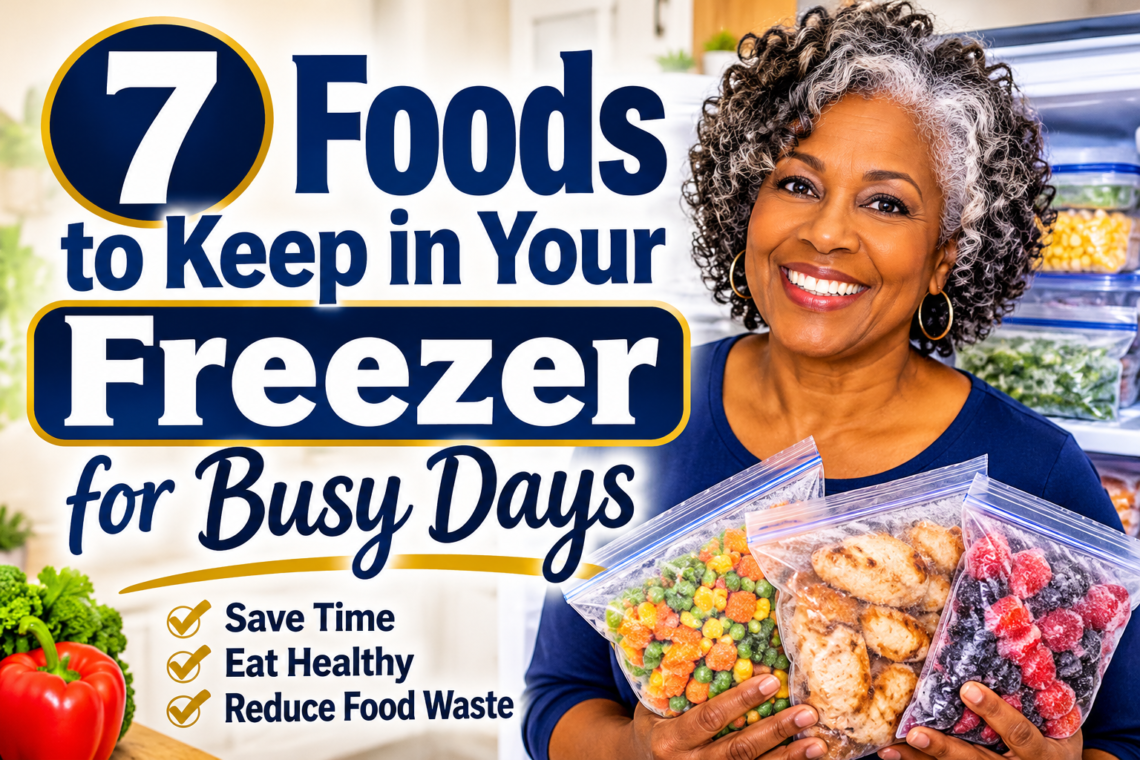
7 Foods to Keep in Your Freezer for Busy Days
Some days, making dinner is less about finding the perfect recipe and more about getting something satisfying on the table without starting from scratch.
That’s where a well-stocked freezer earns its keep. A few versatile ingredients and ready-to-reheat meals give you options when the day runs long, the fridge looks bare, or you simply don’t feel like chopping another onion.
The secret is versatility: choose foods you can use in several meals, not ingredients that require a special recipe. Here are seven freezer staples to build your busy-day backup plan around.
1. Frozen Vegetables
A bag of broccoli, peas, green beans, or mixed vegetables is an easy starting point for a quick meal. Choose a few varieties you already enjoy, rather than filling the freezer with vegetables you feel you should eat.
Use them to round out pasta, noodle bowls, soups, or a simple dinner of protein and vegetables. Plain varieties also let you choose your own seasonings and sauces.
Try this on a busy day
Prepare frozen broccoli according to the package directions, then toss it with hot pasta, olive oil, Parmesan, and black pepper. Add beans or cooked chicken if you like.
Follow the package’s cooking instructions rather than assuming frozen vegetables are ready to eat.
2. Frozen Fruit
Berries, mango chunks, peaches, and pineapple give you plenty of breakfast and snack possibilities without needing to use up an entire container of fresh fruit right away.
Choose individual fruits or a mix that suits your routine. If smoothies aren’t your thing, use fruit in warm oatmeal, a cooked fruit topping, or a simple baked dessert.
Try this on a busy day
Simmer frozen berries with a splash of water until they soften into a spoonable sauce. Serve over oatmeal, pancakes, or plain yogurt after the sauce has cooled slightly.
Check the label for preparation instructions, particularly before using fruit without cooking it.
3. Cooked Rice or Other Grains
Rice, quinoa, and other cooked grains make useful building blocks for bowls, soups, and side dishes. You can buy frozen, ready-to-heat portions or freeze extra portions from a batch you prepare at home.
Package homemade grains in meal-sized amounts so you don’t have to thaw a large container just to make lunch.
Try this on a busy day
Pair reheated rice with cooked vegetables, beans, and your favorite sauce. Try salsa and avocado for one meal, or sesame oil and a little soy sauce for another.
For homemade batches, refrigerate promptly in shallow containers rather than leaving a pot on the counter to cool for hours. USDA advises refrigerating perishable leftovers within two hours, or within one hour when the temperature is above 90°F.[fsis.usda][fsis.usda]
4. Fully Cooked Chicken
Portions of cooked, shredded or sliced chicken can take some of the work out of sandwiches, wraps, soups, and pasta dishes.
Freeze extra chicken from a meal you’ve already prepared, or choose a commercially frozen product labeled fully cooked. Keep it plain or lightly seasoned if you want to use it in different kinds of dishes.
Try this on a busy day
Add cooked chicken to a saucepan with broth and frozen vegetables for a simple soup. Serve with toast or add cooked noodles.
Label homemade portions clearly so you don’t confuse cooked chicken with raw poultry. Reheat leftovers to an internal temperature of 165°F, checking with a food thermometer.[fsis.usda]
5. Cooked Beans or Lentils
If you regularly cook beans or lentils, freeze some in small portions for future meals. They give you an easy starting point for tacos, soups, grain bowls, and meatless dinners.
You can also freeze portions of a favorite bean-based dish rather than the beans alone. Think lentil stew, black bean filling, or chickpeas in tomato sauce.
Try this on a busy day
Heat cooked black beans with salsa and serve in tortillas with shredded cabbage and cheese. Or stir cooked lentils into a jar of pasta sauce for a simple variation on spaghetti night.
Canned beans are also a convenient pantry option; freezer portions are especially useful when you’re saving extras from a batch you’ve already cooked.
6. Sliced Bread, English Muffins, or Tortillas
Keep one bread staple that fits the meals you actually make. Sliced bread works for toast and sandwiches, English muffins make a handy breakfast base, and tortillas turn assorted ingredients into wraps or quesadillas.
Portion them before freezing so you can remove only what you need. If tortillas tend to stick together, separate small stacks with freezer-safe parchment.
Try this on a busy day
Make a quesadilla with a tortilla, cheese, and reheated beans or cooked chicken. Serve with salsa and whatever vegetables you have available.
Follow the product’s instructions for thawing or heating, and keep the package well sealed between uses.
7. Soup, Chili, or Stew in Individual Portions
Sometimes the best freezer food is a meal that’s already finished.
The next time you make a favorite soup, chili, or stew, set aside a few portions for future busy days. Choose containers sized for one meal—or one household meal—so reheating doesn’t create another big batch of leftovers.
Try this on a busy day
Reheat a portion of chili and serve it with toast, a baked potato, or rice. A container of vegetable soup can become a more substantial meal with beans or cooked chicken added.
USDA says frozen leftovers can be reheated without thawing first, including soups and stews in a saucepan or microwave. Make sure leftovers reach 165°F throughout.[fsis.usda][fsis.usda]
Make Your Freezer Easier to Use
A freezer backup plan works best when you can find what you have. Keep the system simple:
- Label homemade foods with the name and freezing date.
- Freeze portions that match how much you normally eat.
- Keep similar foods together.
- Move older items toward the front.
- Keep a short inventory on your phone or freezer door.
For safe storage, maintain your freezer at 0°F or below. Freezing does not make improperly handled food safe, and bacteria can become active again after food thaws. When thawing is needed, use the refrigerator, cold water, or microwave—not the kitchen counter.[fsis.usda][fsis.usda]
You don’t need a freezer packed to the brim. Start with a few foods you enjoy and know how to use. The goal is to make the next busy day easier, not give yourself another meal-prep project.
Disclaimer
This article is for general informational purposes only and is not a substitute for personalized medical or nutrition advice. Choose foods that meet your dietary needs, allergies, and any restrictions recommended by your healthcare professional. Always follow package directions and current food-safety guidance for cooking, cooling, freezing, thawing, and reheating. Preparation times vary by food, portion size, and appliance; use a food thermometer where appropriate rather than relying on appearance or heating time alone.


You May Also Like

🌍 10 Best Winter Travel Destinations (Cold & Warm)

What Career Should You Have? Feeling Stuck at Work? Here’s a Quiz That Helps You Decide
