This site may contain links to affiliate websites, and I may earn a commission for any purchases made through those links at no additional cost to you.
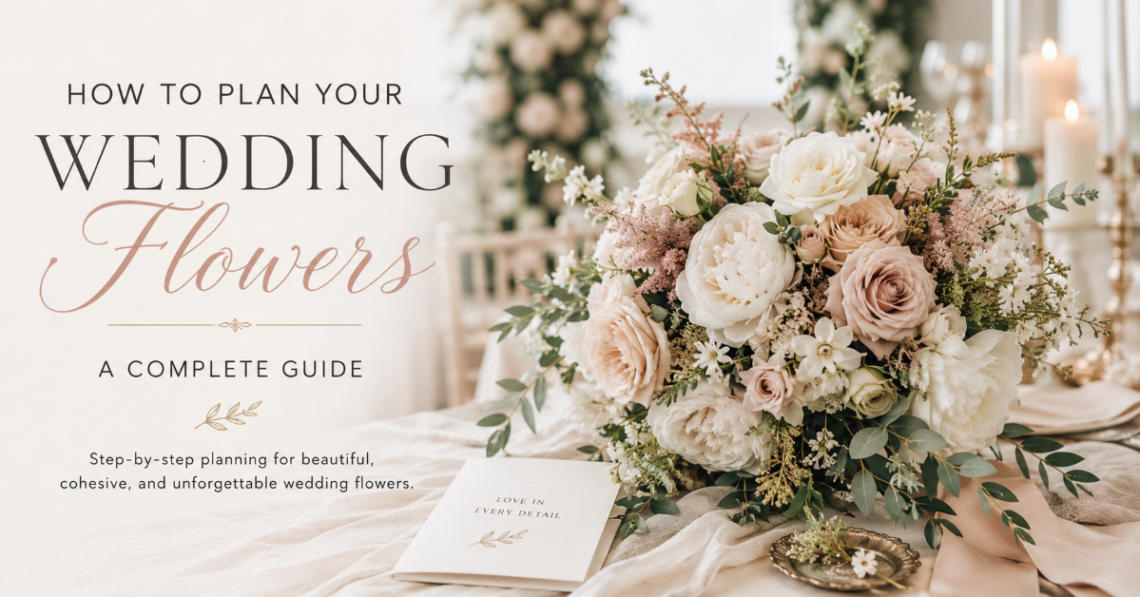
How to Plan Your Wedding Flowers: A Complete Guide
How to Plan Your Wedding Flowers: A Complete Guide
Wedding flowers can transform a wedding venue from beautiful to unforgettable.
From the bridal bouquet carried down the aisle to the flowers surrounding your ceremony, elegant centerpieces at the reception, and the small floral details throughout the celebration, flowers help create the atmosphere and personality of your wedding day.
But planning wedding flowers can also feel overwhelming.
Which flowers should you choose? How much should you budget? What flowers are available during your wedding season? How many arrangements do you actually need? And what should you ask your florist?
The good news is that you don’t have to figure everything out at once.
With a clear floral vision, an organized plan, and a realistic budget, you can create wedding flowers that feel beautiful, cohesive, and personal.
In this guide, you’ll learn how to plan your wedding flowers step by step, from choosing your floral style and colors to planning bouquets, ceremony flowers, reception flowers, and your floral budget.
1. Start With Your Wedding Flower Vision
Before choosing individual flowers, start with the overall feeling you want your wedding flowers to create.
Think about the words that describe your dream wedding.
Perhaps you envision:
- Romantic
- Elegant
- Timeless
- Modern
- Organic
- Luxurious
- Whimsical
- Classic
- Sophisticated
- Garden-inspired
Your floral design should work together with your wedding venue, wedding dress, stationery, décor, linens, lighting, and overall wedding style.
For example, a formal ballroom may inspire structured arrangements and classic roses, while a garden venue may lend itself beautifully to loose, organic arrangements with seasonal flowers and greenery.
Try the Three-Word Method
Choose three words that describe your ideal wedding flowers.
For example:
Romantic • Elegant • Timeless
Or:
Organic • Refined • Modern
These three words can become your floral design filter.
Whenever you’re considering a flower, arrangement, or installation, ask:
Does this fit the feeling I’m trying to create?
2. Choose Your Wedding Flower Style
Once you’ve established your vision, choose a floral style.
Classic & Timeless
Think roses, elegant arrangements, traditional bouquets, and sophisticated color palettes.
Romantic Garden
Loose arrangements, garden roses, delicate blooms, soft colors, and natural movement.
Modern Minimalist
Fewer flowers, intentional placement, clean lines, sculptural shapes, and restrained color palettes.
Organic & Natural
Seasonal flowers, abundant greenery, natural textures, and arrangements that appear effortlessly gathered.
Quiet Luxury
Refined flowers, sophisticated neutral colors, restrained arrangements, beautiful textures, and an elegant overall presentation.
Old-World Elegance
Rich textures, romantic flowers, soft movement, vintage-inspired details, and European garden influences.
Your floral style doesn’t have to fit perfectly into one category. You can combine elements from several styles to create something uniquely yours.
3. Create a Wedding Flower Mood Board
A mood board is one of the best ways to communicate your vision.
Collect images of:
- Bridal bouquets
- Bridesmaid bouquets
- Ceremony arches
- Aisle flowers
- Reception centerpieces
- Head tables
- Wedding cakes
- Floral installations
- Greenery
- Table settings
- Wedding dresses
- Invitations
- Venue décor
- Colors and textures
Don’t worry about finding exact flowers in every photograph.
Instead, look for patterns.
Do you keep choosing:
- Ivory flowers?
- Soft blush?
- Abundant greenery?
- Loose garden-style bouquets?
- Champagne and neutral tones?
- Dramatic floral installations?
Those repeated choices can reveal your true floral style.
4. Choose Your Wedding Flower Colors
Your flowers should complement your wedding color palette rather than compete with it.
Start with your primary wedding colors and then consider:
Primary Color
The main color that establishes your palette.
Secondary Color
A complementary color that adds dimension.
Accent Color
A smaller amount of color used for visual interest.
Neutral
Ivory, cream, white, beige, taupe, or another soft neutral can help balance the palette.
Greenery
Greenery can function as both a floral accent and an important part of the overall color story.
For a sophisticated wedding, you might choose:
Ivory + Champagne + Soft Blush + Warm Greenery
For a dramatic celebration:
Burgundy + Dusty Rose + Plum + Deep Green
For a modern wedding:
White + Cream + Taupe + Soft Green
The key is cohesion.
5. Consider Your Wedding Season
Your wedding date can influence which flowers are readily available and which options may affect your budget.
Spring
Spring weddings can feature flowers such as:
- Peonies
- Ranunculus
- Sweet peas
- Tulips
- Anemones
- Garden roses
Summer
Summer can offer beautiful seasonal choices such as:
- Garden roses
- Dahlias
- Lisianthus
- Cosmos
- Zinnias
- Hydrangeas
Autumn
Autumn arrangements can incorporate:
- Dahlias
- Garden roses
- Chrysanthemums
- Amaranthus
- Seasonal berries
- Textured foliage
Winter
Winter weddings can beautifully incorporate:
- Roses
- Anemones
- Ranunculus
- Amaryllis
- Evergreen foliage
- Branches
- Berries
Remember: Flower availability varies by location, growing conditions, and sourcing. Always ask your florist what will realistically be available for your wedding date.
6. Plan Your Bridal Bouquet
Your bridal bouquet is one of the most visible floral elements of the wedding.
Consider your:
Bouquet Shape
- Round
- Hand-tied
- Garden style
- Cascading
- Posy
- Organic
- Sculptural
Flowers
Choose flowers that complement your:
- Wedding dress
- Wedding colors
- Floral style
- Wedding season
Bouquet Size
Your bouquet should feel proportional to your dress and your overall wedding aesthetic.
A dramatic dress may work beautifully with a larger statement bouquet, while a minimalist dress might pair beautifully with a refined, understated arrangement.
7. Plan Your Bridesmaid Bouquets
Bridesmaid bouquets should complement the bridal bouquet without necessarily being identical.
You could use:
- The same flowers in smaller arrangements
- Similar colors with different flower combinations
- A simplified version of the bridal bouquet
- One consistent flower throughout the wedding party
Consider the color of the bridesmaids’ dresses when selecting flowers.
The flowers should be visually harmonious with the dresses rather than disappearing against them.
8. Plan Your Boutonnières
Boutonnières are small, but they can add an elegant finishing detail.
You may need them for:
- Groom
- Groomsmen
- Fathers
- Grandfathers
- Ushers
- Other members of the wedding party
A boutonnière can feature a flower from the bridal bouquet, a complementary flower, greenery, or another meaningful floral element.
9. Plan Your Ceremony Flowers
Your ceremony is often the emotional centerpiece of the wedding day.
Think about where flowers will have the greatest visual impact.
Possible floral areas include:
- Ceremony entrance
- Welcome arrangement
- Wedding arch
- Altar
- Aisle
- Chairs
- Pews
- Signage
- Floral installations
You don’t necessarily need flowers everywhere.
Sometimes investing in one beautiful focal installation creates a stronger visual effect than spreading a smaller floral budget across many locations.
10. Plan Your Wedding Arch or Floral Installation
A wedding arch can become one of the most photographed elements of your ceremony.
Popular approaches include:
Full Floral Arch
Flowers cover much of the structure for a lush, romantic effect.
Asymmetrical Installation
Flowers are concentrated on one side or section of the arch.
Grounded Floral Arrangement
Large floral arrangements surround the base of the ceremony structure.
Floral Meadow
Flowers appear to grow naturally around the ceremony area.
Minimal Floral Accent
A smaller amount of carefully placed flowers creates an elegant modern look.
Ask your florist what is appropriate for your venue and structure.
11. Plan Your Aisle Flowers
Aisle flowers can be subtle or dramatic.
Options include:
- Petals
- Small arrangements
- Chair flowers
- Grounded floral clusters
- Floral meadows
- Repeating floral arrangements
When planning aisle flowers, consider the length and width of your aisle as well as how the flowers will appear in photographs.
12. Plan Your Reception Flowers
Now carry your floral story into the reception.
Possible areas include:
- Guest tables
- Head table
- Cake table
- Cocktail tables
- Bar
- Welcome table
- Escort card table
- Guest book table
- Dessert table
- Lounge areas
- Fireplace
- Staircases
- Signage
Your reception flowers don’t have to duplicate your ceremony flowers.
Instead, they should feel like part of the same floral story.
13. Choose Your Centerpieces
Centerpieces are one of the biggest reception floral decisions.
Consider whether you prefer:
Low & Lush
Ideal for conversations because guests can easily see across the table.
Tall & Dramatic
Creates height and visual impact.
Garden-Inspired
Loose, abundant arrangements with natural movement.
Floral Runner
A continuous floral design across a long table.
Mixed Heights
Combines different arrangement sizes for a layered tablescape.
Don’t forget to consider your candles, linens, dinnerware, glassware, and table shape.
14. Don’t Forget the Wedding Cake Flowers
Flowers can beautifully connect the cake to the rest of the wedding design.
You might use:
- Fresh flowers
- Small floral accents
- A floral cascade
- Greenery
- A floral cake topper
Always coordinate with your florist and cake designer before placing fresh flowers on a cake.
15. Plan the Small Floral Details
Sometimes the smallest details create the most memorable design.
Consider:
- Welcome sign
- Escort cards
- Menu cards
- Bar
- Guest book
- Gift table
- Dessert table
- Lounge area
- Staircase
- Fireplace
- Other decorative areas
You don’t need flowers on every surface.
Choose the areas that matter most to you.
16. Research Wedding Florists
Once you have a clear vision, begin researching florists.
Look at:
- Portfolio
- Floral style
- Reviews
- Experience
- Venue familiarity
- Availability
- Minimum investment
- Delivery services
- Setup services
- Breakdown services
- Rental offerings
Look for a florist whose design style matches your vision.
A florist can be incredibly talented but still not be the right fit if their aesthetic is very different from yours.
17. Questions to Ask Your Florist
Before signing a contract, ask:
Availability
- Are you available on my wedding date?
- Have you worked at my venue?
- Do you have a minimum floral investment?
Flowers
- Which flowers will be in season?
- Are substitutions possible?
- How do you handle flower availability changes?
Services
- Do you provide delivery?
- Do you provide setup?
- Do you provide breakdown?
- Do you provide vessels or rentals?
Venue
- Are there venue restrictions?
- Does the venue require a preferred florist?
- Are there installation requirements?
Contract
- What deposit is required?
- When are payments due?
- What is your cancellation policy?
- What happens if the final floral cost changes?
Write down the answers and compare florists before making your final decision.
18. Create Your Wedding Flower Budget
Flowers can represent a significant portion of a wedding budget, so establish your target amount early.
Your floral budget might include:
- Bridal bouquet
- Bridesmaid bouquets
- Boutonnières
- Ceremony flowers
- Wedding arch
- Aisle flowers
- Centerpieces
- Head table
- Cake flowers
- Cocktail table flowers
- Delivery
- Setup
- Breakdown
- Rentals
- Other floral installations
Instead of asking only:
“How much will my flowers cost?”
ask:
“Which floral elements matter most to me?”
Then prioritize your budget accordingly.
19. Create a Floral Priority List
If your budget is limited, decide what deserves the largest investment.
For example:
High Priority
- Wedding arch
- Bridal bouquet
- Reception centerpieces
Medium Priority
- Bridesmaid bouquets
- Head table
- Cake flowers
Lower Priority
- Additional small arrangements
- Decorative floral accents
This gives your florist a clear understanding of where you want your investment to go.
20. Common Wedding Flower Planning Mistakes
Mistake #1: Choosing flowers before choosing your style
Start with your overall vision.
Mistake #2: Ignoring the wedding venue
Your floral design should work with the architecture and atmosphere of the space.
Mistake #3: Forgetting your wedding season
Always discuss seasonal availability with your florist.
Mistake #4: Not establishing a budget
A floral vision without a budget can quickly become unrealistic.
Mistake #5: Trying to decorate every surface
More flowers don’t always mean a more beautiful wedding.
Mistake #6: Not asking about setup and delivery
These services can be an important part of your floral budget.
Mistake #7: Showing your florist only one inspiration photograph
A mood board gives your florist a much better understanding of your overall vision.
Mistake #8: Waiting too long to book your florist
Popular florists can book wedding dates well in advance.
Wedding Flower Planning Checklist
Before your floral plans are finalized, make sure you’ve:
□ Defined your floral style
□ Created a mood board
□ Selected your wedding colors
□ Considered your wedding season
□ Chosen your favorite flowers
□ Planned your bridal bouquet
□ Planned bridesmaid bouquets
□ Planned boutonnières
□ Planned ceremony flowers
□ Planned your wedding arch
□ Planned aisle flowers
□ Planned reception flowers
□ Chosen centerpiece styles
□ Planned head table flowers
□ Planned cake flowers
□ Planned cocktail table flowers
□ Researched florists
□ Compared florist proposals
□ Asked important florist questions
□ Established your floral budget
□ Tracked your deposit
□ Tracked payment deadlines
□ Confirmed flower quantities
□ Confirmed delivery and setup
□ Completed your final floral review
🌸 Ready to Plan Your Wedding Flowers?
Your wedding flowers don’t have to feel overwhelming.
When you have your floral vision, inspiration, colors, arrangements, florist information, budget, and wedding-day details organized in one place, the planning process becomes much easier.
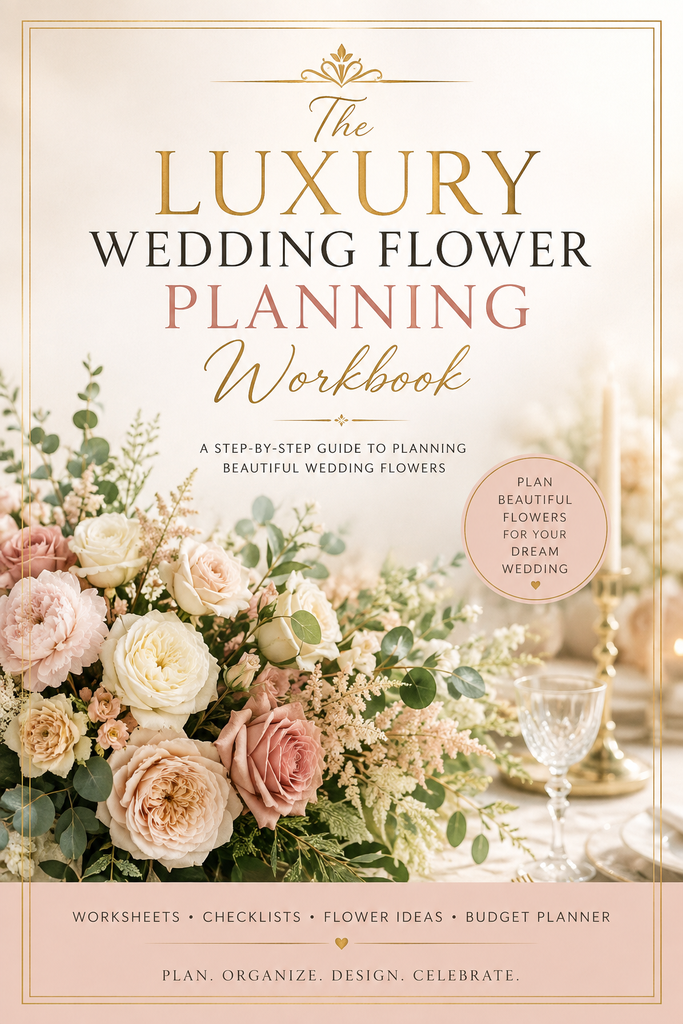
The Luxury Wedding Flower Planning Workbook
An Elegant Guide & Printable Planner for Designing Your Dream Wedding Flowers
This 45-page printable wedding flower planning workbook gives you dedicated planning pages for:
🌸 Your wedding flower vision
💐 Floral inspiration and mood boards
🎨 Wedding color palette
💗 Bridal and bridesmaid bouquets
🤵 Boutonnières
🌿 Ceremony flowers
✨ Wedding arch and floral installations
🌸 Aisle flowers
🥂 Reception flowers
🕯️ Centerpieces
🍰 Cake flowers
🌷 Floral details and accents
📋 Florist research and comparison
💰 Floral budget planning
💳 Deposit and payment tracking
🌼 Flower quantity planning
✅ Ceremony, reception, wedding-week and wedding-day checklists
📞 Important floral contacts
📝 Final floral vision and master checklist
Ready to Plan Your Wedding Flowers?
Bring your wedding flower vision to life with The Luxury Wedding Flower Planning Workbook. This printable workbook gives you a beautiful, organized place to plan your floral style, create your wedding flower mood board, organize your flower choices, track your budget, prepare for your florist, and keep important wedding flower details together.
Whether you’re just beginning your floral planning or already have ideas in mind, this workbook can help make the process feel more organized and enjoyable.
👉 Get The Luxury Wedding Flower Planning Workbook
46 Pages • Printable PDF • 8.5 × 11 inches • Instant Download