This site may contain links to affiliate websites, and I may earn a commission for any purchases made through those links at no additional cost to you.

15 Simple Ways to Lower Your Monthly Grocery Bill
Smart Shopping, Simple Savings, and Practical Ways to Stretch Your Grocery Budget
Grocery shopping is something we all have to do, but the cost of filling our shopping carts can add up quickly. Between rising food prices, household necessities, and everyday meals, keeping grocery expenses under control can be challenging. 15 Simple Ways to Lower Your Monthly Grocery Bill
The good news is that saving money on groceries doesn’t mean giving up the foods you enjoy or sacrificing the quality of your meals. With a little planning, smarter shopping habits, and a few simple changes, you can make your grocery budget go further.
Whether you’re shopping for yourself, your family, or managing a household on a fixed income, these 15 practical ideas can help you spend less at the grocery store and make the most of every dollar.
1. Create a Weekly Grocery Budget
One of the easiest ways to control grocery spending is to establish a weekly budget.
Decide how much you can comfortably spend on groceries each week. Having a spending limit helps you become more mindful of what goes into your shopping cart.
Keep track of your grocery purchases and compare your spending from week to week. Even small savings can make a difference over time.
Money-saving tip: Keep a grocery budget notebook or use a simple spreadsheet to track your expenses.

A beautiful kitchen countertop with a grocery budget notebook, calculator, pen, and shopping list.]
2. Plan Your Meals Before Shopping
Meal planning can help eliminate unnecessary grocery purchases and reduce food waste.
Before heading to the store, decide what you will prepare for breakfast, lunch, and dinner throughout the week.
Choose meals that use some of the same ingredients. For example, leftover roasted chicken can become chicken salad, soup, or a casserole.
Planning ahead helps you purchase only what you need.
Money-saving tip: Plan five or seven meals using ingredients you already have in your kitchen.
3. Always Shop With a Grocery List
Walking into a grocery store without a list can make it easy to purchase things you don’t need.
Write down the ingredients and household essentials you need before leaving home. Stick to your list as closely as possible.
A shopping list also helps prevent buying duplicate items that may already be sitting in your pantry.
Money-saving tip: Organize your list by grocery department to make shopping quicker and easier.

A neatly written grocery shopping list beside reusable shopping bags and fresh produce.]
4. Check Your Pantry and Refrigerator First
Before buying groceries, take a few minutes to see what you already have.
Check your pantry, refrigerator, and freezer for ingredients that can be used in upcoming meals.
You may discover canned vegetables, rice, pasta, frozen chicken, or other ingredients that can help you prepare meals without purchasing additional items.
Money-saving tip: Make a habit of using older pantry and freezer items before purchasing replacements.
5. Compare Prices Between Brands
Name-brand products are not always the least expensive option.
Store brands and generic products can offer similar everyday quality at a lower price.
Compare ingredients, package sizes, and unit prices before deciding which product is the better value.
Money-saving tip: Try store-brand versions of products you regularly purchase, such as flour, rice, oatmeal, canned vegetables, and cleaning supplies.
6. Use Coupons and Store Rewards
Coupons and grocery store loyalty programs can provide additional savings.
Check your grocery store’s weekly advertisements and digital coupons before shopping.
Some stores offer discounts on products you already purchase, while others provide reward points or special member prices.
Money-saving tip: Only use coupons for items you actually need. Buying something unnecessary simply because it is discounted isn’t saving money.
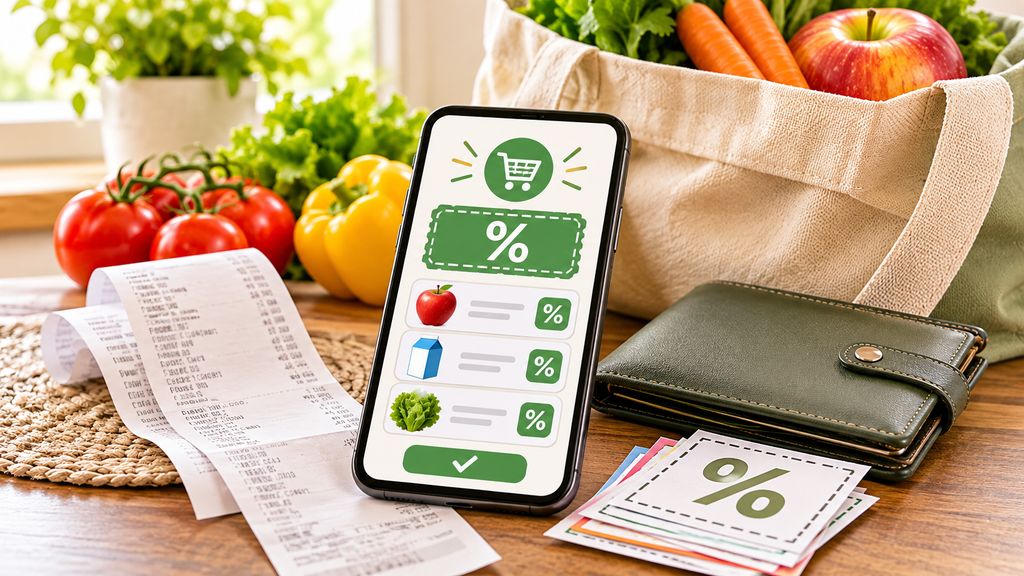
A smartphone displaying grocery savings coupons beside a wallet and grocery receipts.
7. Purchase Seasonal Fruits and Vegetables
Fresh produce can be expensive, especially when certain fruits and vegetables are out of season.
Buying seasonal produce can help reduce grocery expenses while giving you more variety in your meals.
Consider apples, oranges, squash, berries, cabbage, and other seasonal favorites.
Frozen vegetables and fruits can also be economical choices and are convenient to keep on hand.
Money-saving tip: Check weekly grocery advertisements to find the best produce prices.
8. Buy in Larger Quantities When It Makes Sense
Some grocery products cost less per unit when purchased in larger packages.
Rice, oatmeal, dried beans, pasta, and other pantry staples may offer better value when purchased in larger quantities.
However, only purchase larger packages when you have enough storage space and can use the food before it expires or loses quality.
Money-saving tip: Compare the unit price rather than assuming the largest package is always the best deal.
9. Reduce Food Waste
Throwing away unused food is like throwing away money.
Keep track of foods that frequently go unused in your household. Purchase smaller quantities when necessary and use leftovers creatively.
Store food properly to help maintain freshness and make leftovers easy to identify.
Money-saving tip: Designate one shelf in your refrigerator for foods that should be eaten first.
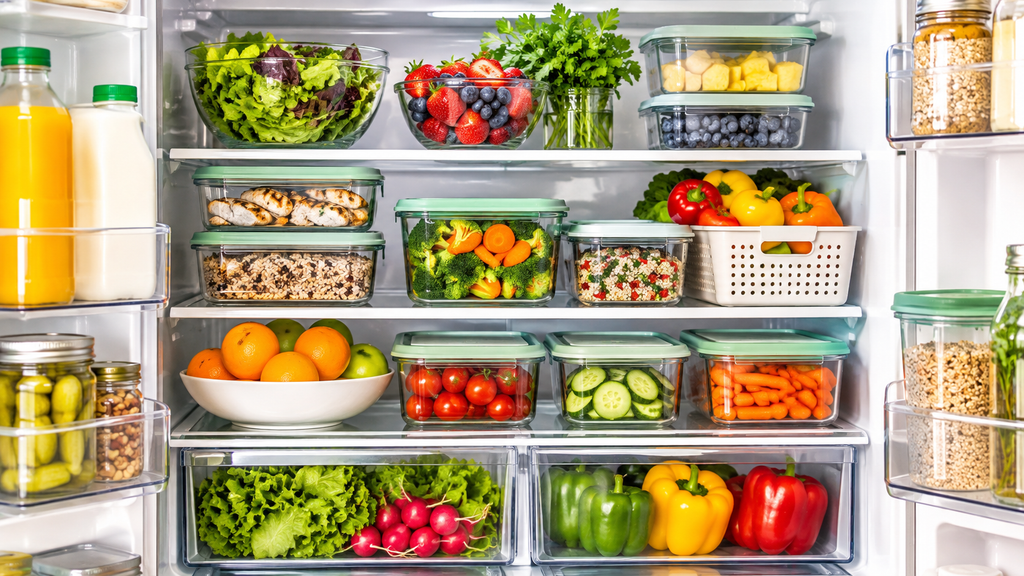
Organized refrigerator with clear food storage containers, fresh vegetables, and labeled leftovers.
10. Cook More Meals at Home
Restaurant meals, takeout, and delivery can quickly increase your monthly food expenses.
Preparing more meals at home gives you greater control over ingredients, serving sizes, and costs.
You don’t need complicated recipes to prepare satisfying meals. Simple homemade soups, roasted vegetables, chicken dishes, salads, and casseroles can be delicious and affordable.
Money-saving tip: Prepare a few meals at home each week instead of ordering takeout.
11. Make Your Freezer Work for You
Your freezer can be one of your best tools for saving money.
Freeze leftover soups, cooked meats, vegetables, and extra portions of homemade meals.
You can also freeze certain fruits and vegetables before they spoil.
Divide larger meals into individual portions so you can quickly prepare lunch or dinner another day.
Money-saving tip: Label freezer containers with the food name and date so you can keep track of what you have.
12. Limit Impulse Purchases
Grocery stores are designed to encourage shoppers to purchase more than they originally intended.
Special displays, snacks near checkout counters, and attractive promotions can tempt you to add extra items to your cart.
Before purchasing something, ask yourself whether it is on your shopping list and whether you genuinely need it.
Money-saving tip: Eat before grocery shopping. Shopping while hungry can make unnecessary purchases more tempting.
13. Choose Affordable Protein Options
Protein is an important part of everyday meals, but some protein choices can be expensive.
Consider including affordable options such as eggs, dried beans, lentils, canned tuna, chicken, and peanut butter.
Compare prices and choose options that fit your household’s nutritional needs and budget.
Money-saving tip: Include a few meatless meals in your weekly meal plan using beans or lentils.
14. Shop Weekly Sales and Compare Grocery Stores
Different grocery stores may offer different prices on the same products.
Review weekly advertisements and compare prices on the items you purchase most often.
You may find that one store has better prices on produce while another offers better deals on pantry staples.
Remember to consider transportation costs and the time required to visit multiple stores.
Money-saving tip: Shop at the store that offers the best overall value rather than chasing every individual sale.
15. Review Your Grocery Spending Every Month
At the end of each month, review your grocery receipts and compare your actual spending with your budget.
Look for patterns. Are you buying too many snacks? Are fresh foods going to waste? Are convenience foods taking up too much of your grocery budget?
Identifying where your money goes can help you make better decisions the following month.
Money-saving tip: Set one realistic savings goal for the next month and work toward it gradually.
Simple Grocery Shopping Habits That Make a Difference
Saving money on groceries doesn’t have to be complicated. Small changes in your shopping routine can add up over time.
Here are five habits worth keeping:
- Plan meals before going shopping.
- Make a grocery list and stick to it.
- Compare unit prices and store brands.
- Use what you already have before purchasing more.
- Keep track of your monthly grocery spending.
Remember, the goal isn’t to spend as little as possible. It’s to make thoughtful purchases, reduce waste, and get the most value from your grocery budget.
Final Thoughts: Make Every Grocery Dollar Count
Managing grocery expenses is an important part of maintaining a household budget. With a little organization and planning, you can enjoy delicious meals while keeping your spending under control.
Start with just two or three of these ideas and gradually incorporate more into your shopping routine.
You might be surprised how much difference a few simple changes can make over time.
At Ever After Living, we believe that smart everyday choices can help make life a little easier, more comfortable, and more affordable.
Explore. Learn. Thrive.
Make Meal Planning Easier with Green Chef
Want to simplify meal planning and make dinner preparation easier? Try Green Chef, a meal-kit service offering convenient recipes and pre-portioned ingredients delivered to your door. Explore meal options that can help you plan your weekly dinners and spend less time figuring out what to cook.
Explore Green Chef Today!
Save on Groceries with Misfits Market
Looking for another way to shop smarter and make the most of your grocery budget? Explore Misfits Market, an online grocery marketplace offering produce, pantry staples, and other grocery essentials. Discover convenient grocery shopping options while exploring ways to reduce food waste and stretch your food budget.
Shop Misfits Market Today!
Discover Convenient Grocery Shopping with Thrive Market
Looking for convenient ways to shop for pantry staples and everyday essentials? Explore Thrive Market, an online membership-based grocery marketplace featuring a variety of food, household, and wellness products. Browse available products and discover convenient options for stocking your pantry.
Explore Thrive Market Today!
Disclaimer
This article is intended for general informational and educational purposes only. Grocery prices, discounts, and savings opportunities vary by location, retailer, and availability. Individual savings will depend on shopping habits, household needs, and local prices. Always compare product prices, package sizes, and quality before making purchasing decisions. Ever After Living does not guarantee specific savings or financial results.

You May Also Like

Unveiling the Price Tag: How Much Do Wedding Cakes Cost?

Top 7 Best Velvet Hangers for Space-Saving and Non-Slip Closet Organization (2025 Guide)
